Ehlers Estate Visits France
Ehlers Estate in Napa Valley
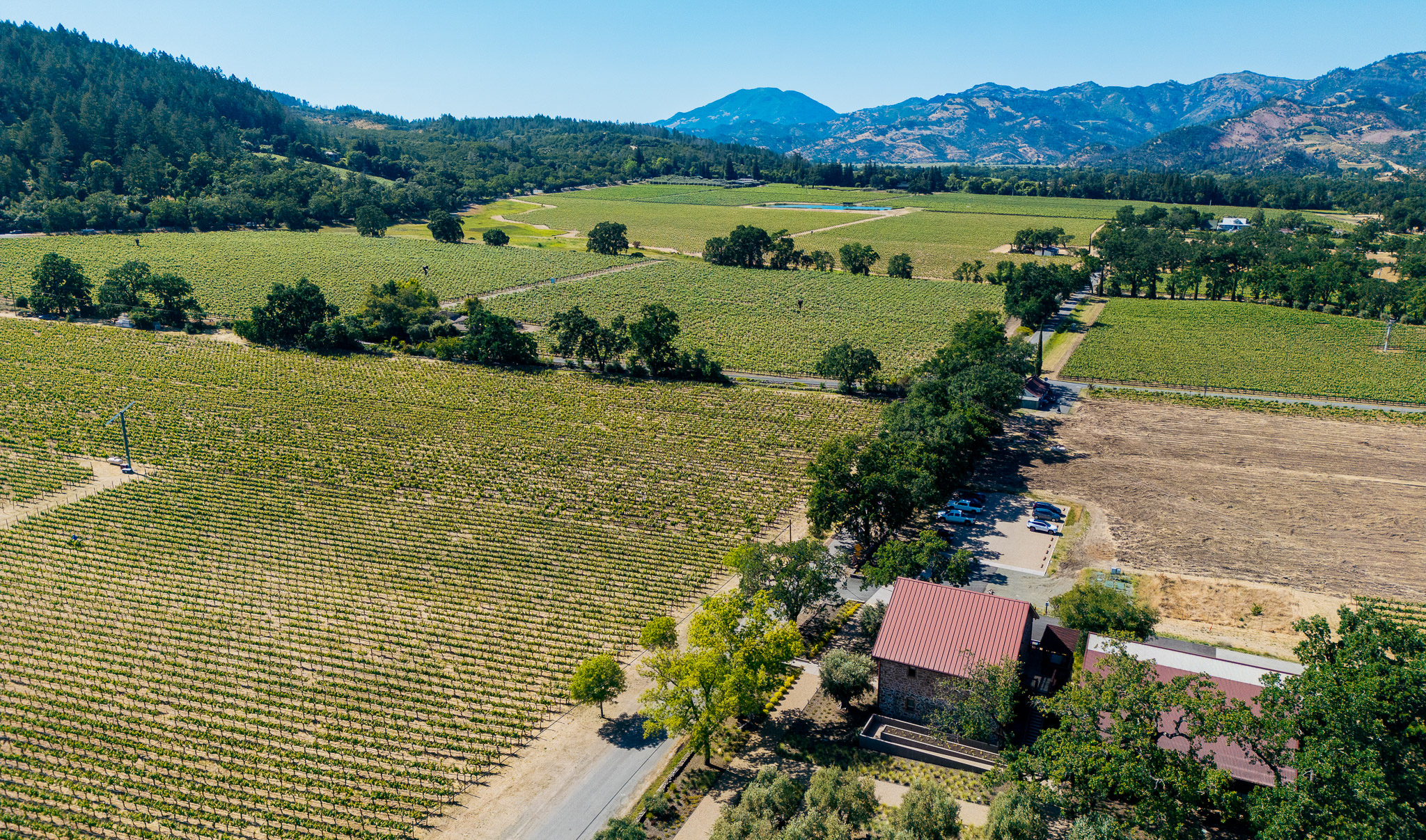
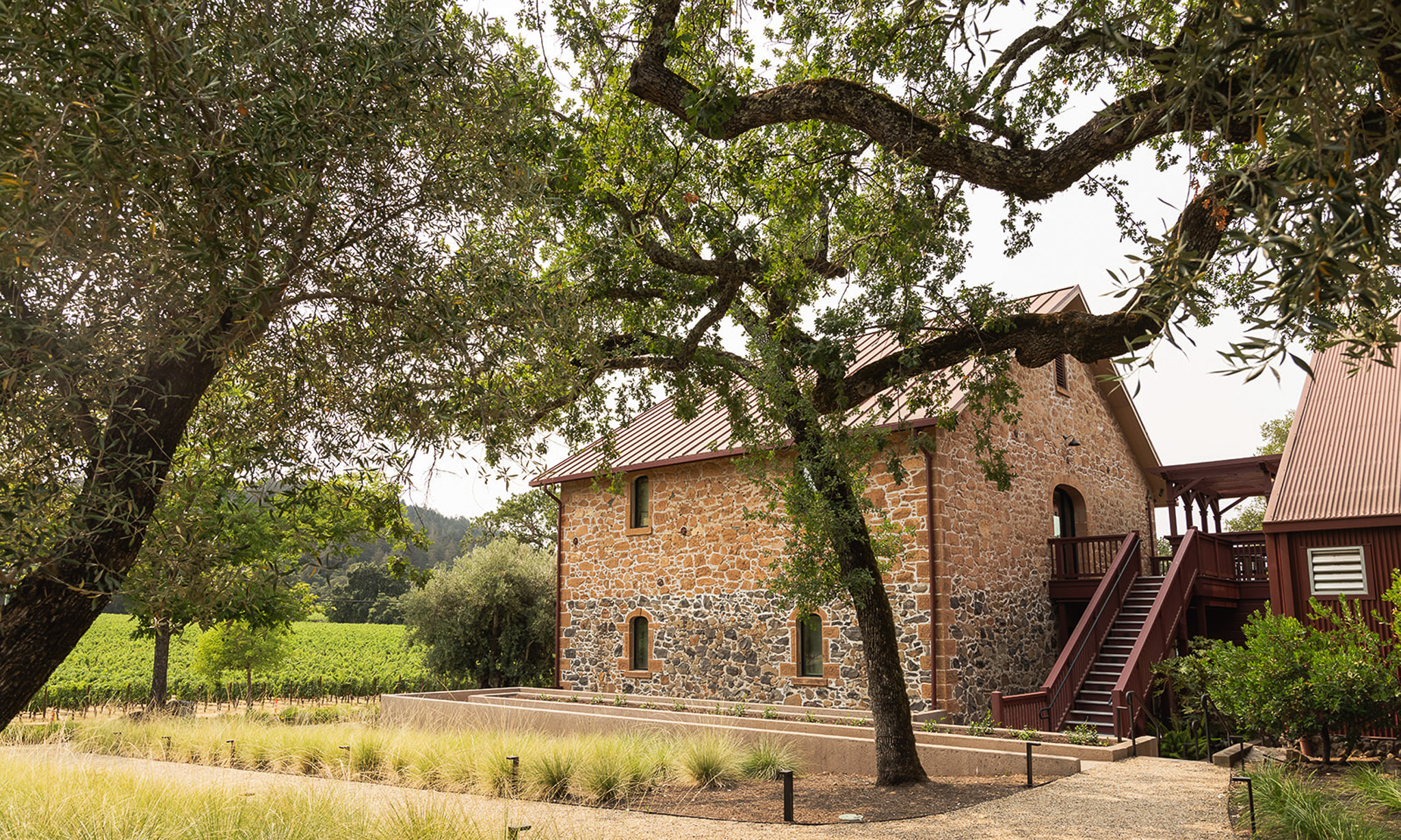
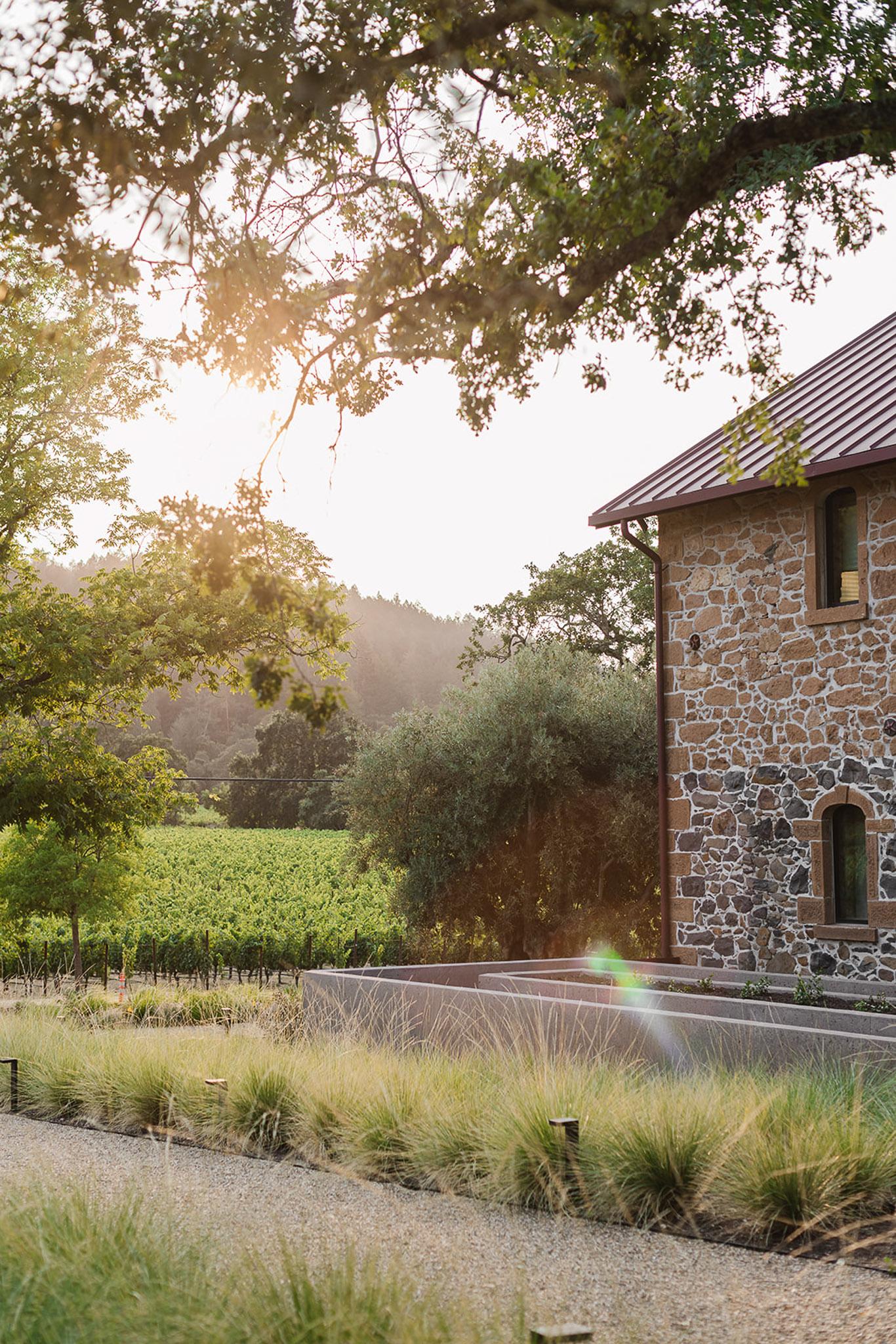
Ehlers Estate is a historic property in Napa Valley with a unique twist to their story. Bernard Ehlers established a 42 acre vineyard and built a winery in 1886, after a successful business selling goods to goldrush miners. The property changed hands multiple times over the years. Fast forward to 1996, when a French couple, Jean and Sylviane Leducq, purchased the winery and set about reuniting the original 42 acre vineyard. The twist in the story begins with the Leducq goals:
• Restore the historic legacy of the winery
• Great fans of Bordeaux wines, the Leducqs wanted to produce a top quality artisan wine using familiar Bordeaux varieties
• The winery would serve a humanitarian purpose, with proceeds supporting a French non-profit foundation focussed on cardiovascular research, a cause close to the family.
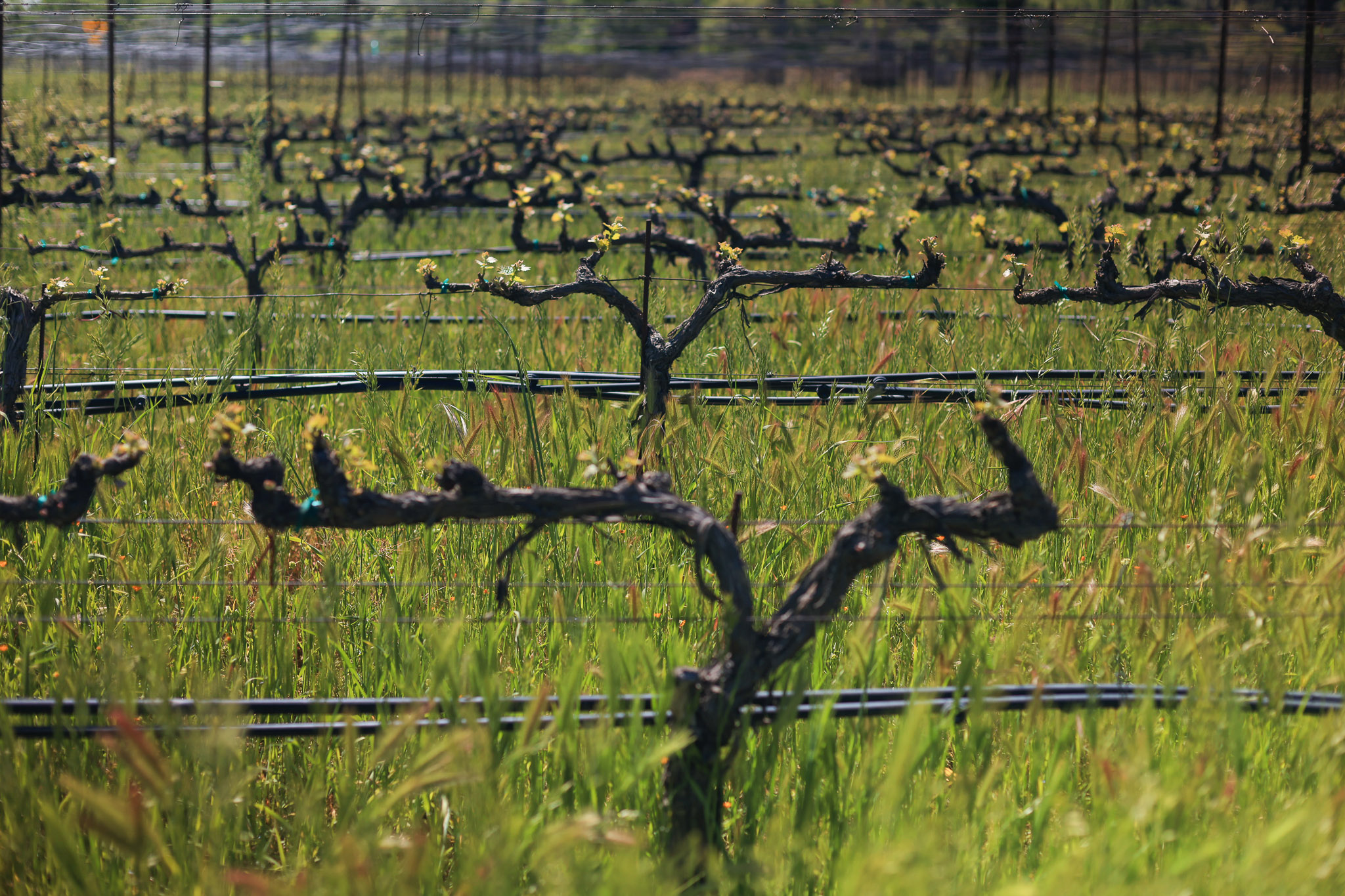
Jean passed away in 2002 and Sylviane in 2013, but the Leducq foundation remains and along with it, the goal of great wines benefitting a humanitarian purpose. This has given winegrowers at Ehlers Estate the freedom to pursue the best possible wines with less regard to the popular variety of the day and what the market currently considers the next great thing. The vineyards have been certified organic by CCOF (California Certified Organic Farmers) since 2008 with biodynamic preparations also being used. A new set of challenges have appeared with the chaotic arrival of climate change.
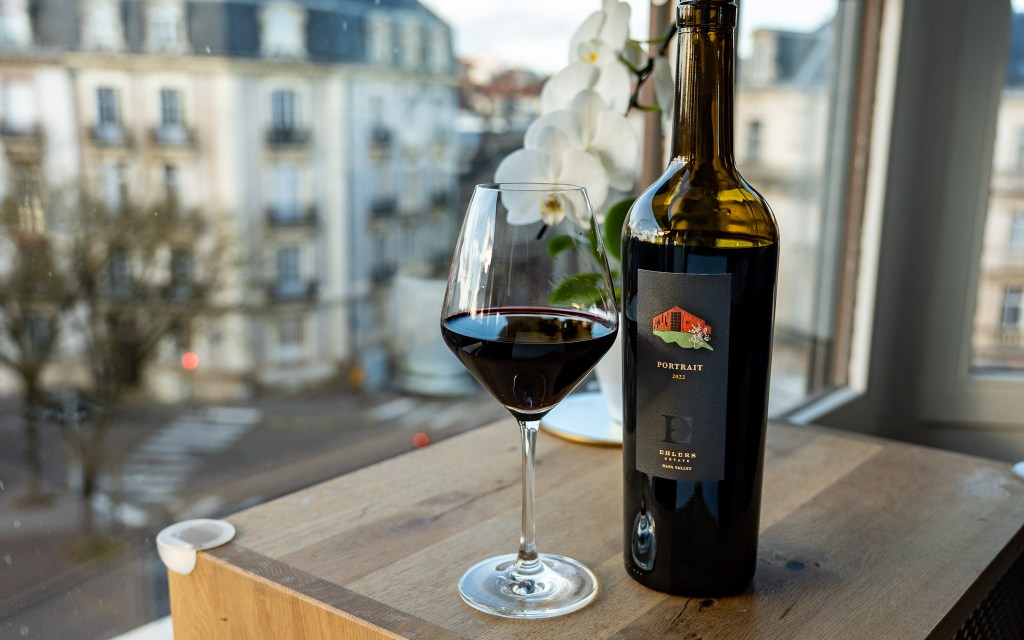
How Ehlers Estate Visited France
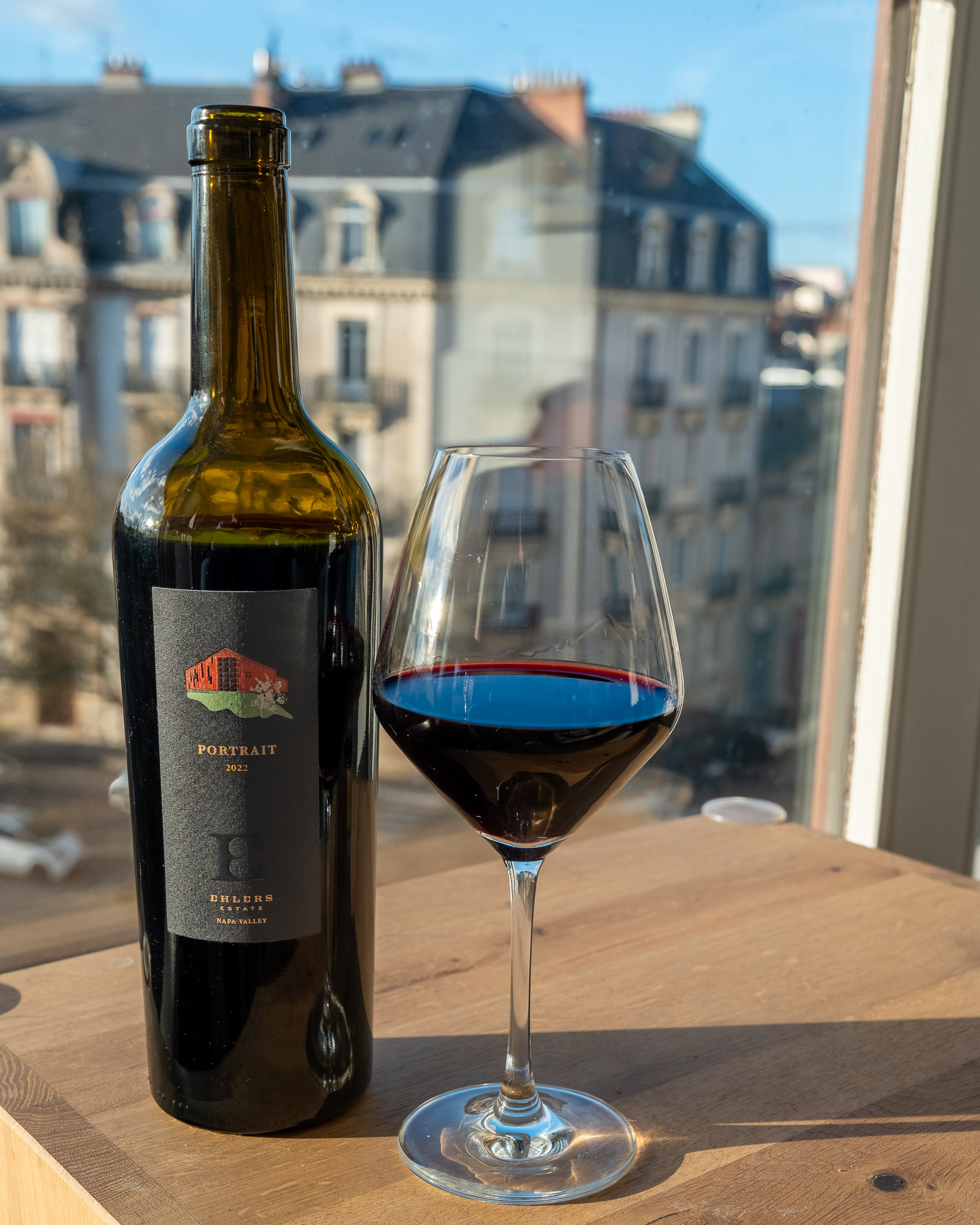
Last fall, I was offered a sample bottle of Ehlers Estate wine. I was very interested as I have several wine writer friends who have praised the wines. The only problem was that I live in France part of the year. They were able to coordinate the bottle arrival in Minnesota while I was home for the holidays and I was able to carry the bottle with me back to France. I enjoyed thinking about pairing the wine with a typical French meal!
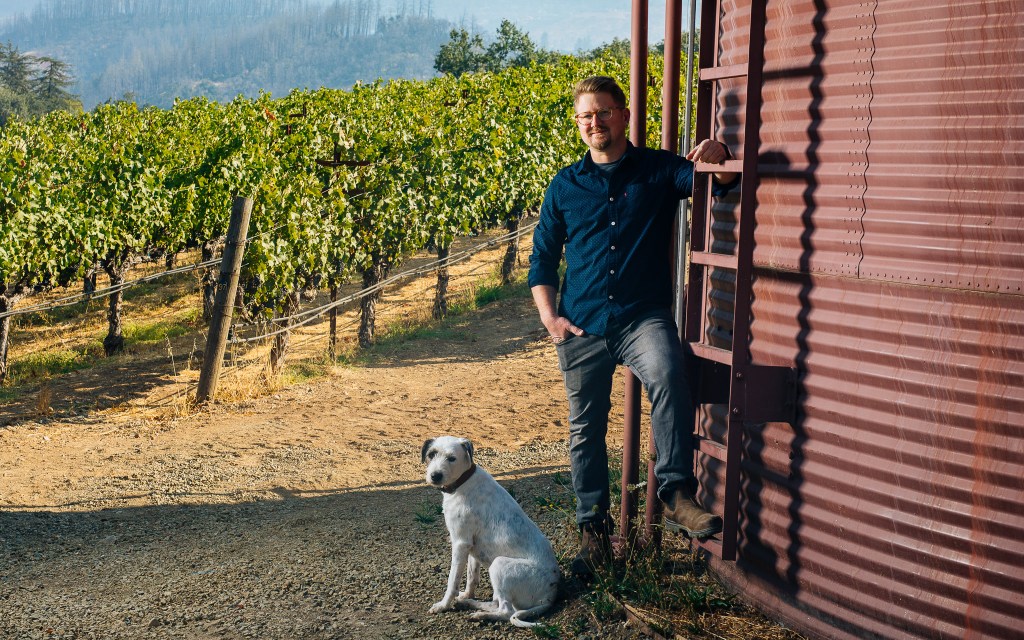
A Conversation with Adam Casto, Ehlers Estate Winegrower
Along with the bottle of wine, I had the opportunity to interview Adam Casto, the winegrower (in France, vigneron) of Ehlers Estate. Adam has been the head of vineyard operations and winemaking since 2023. He opened our discussion by stating there is “no such thing as a great winemaker, there are good winemakers with great fruit. Winemaking is the least interesting, least impactful part of the process (given great fruit).” This drives his focus on ensuring grapes from Ehlers Estate are absolutely the best possible from that site. He added that his guidance from the Leducq Foundation instructs him to set 25, 50, and 100 year goals. In short, his charge is to act now for the future. The estate is currently in the process of generational replanting of the vineyard, which allows Adam to perform some experiments in vineyard design as well as choice of varieties to plant. Given recent experience with climate chaos, Adam is trialing other varieties, including Marselan, a cross between Grenache and Cabernet Sauvignon, designed to perform in hotter climates. While Cabernet Sauvignon is still king in Napa Valley, he believes “one of our adaptations to climate change is going to be moving away from a varietal based consumer marketplace.” To that end, in 2023 he labeled what had been Ehlers Estate Sauvignon Blanc as Ehlers Estate Blanc, listing Sauvignon Blanc 87%, Semillon 13% on the back label. We discussed the wine I had sampled, Portrait, as a good example of things to come from the estate. Whether or not Adam’s prediction about the marketplace comes true, Ehlers Estate is in good hands. His forward-thinking approach to long term vineyard health is sure to pay off for generations to come.
Disclosure: The wine for this post was provided as a media sample. No other compensation was involved, all opinions expressed are mine.
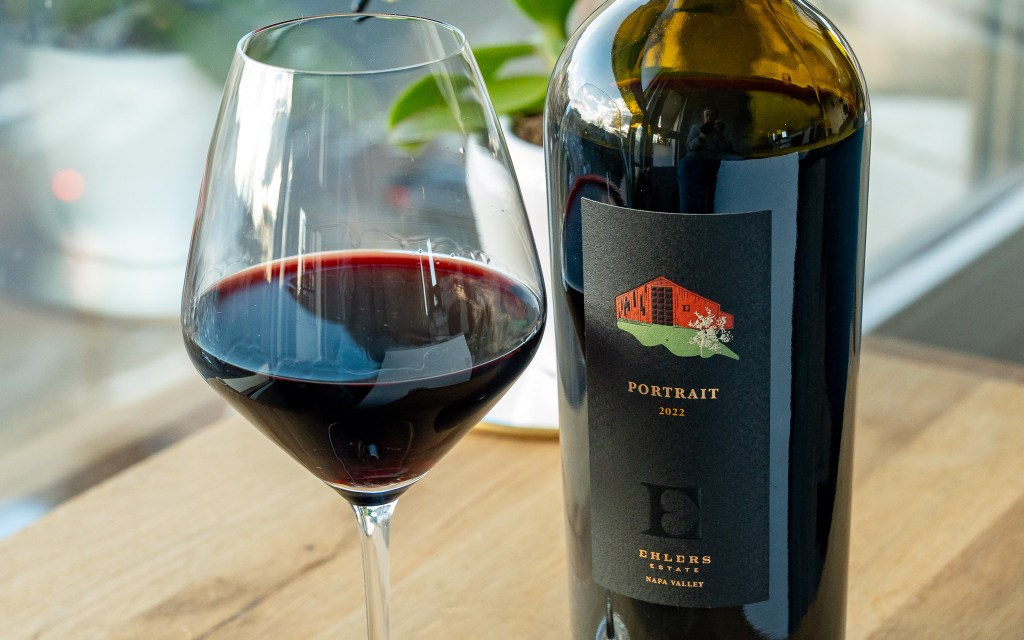
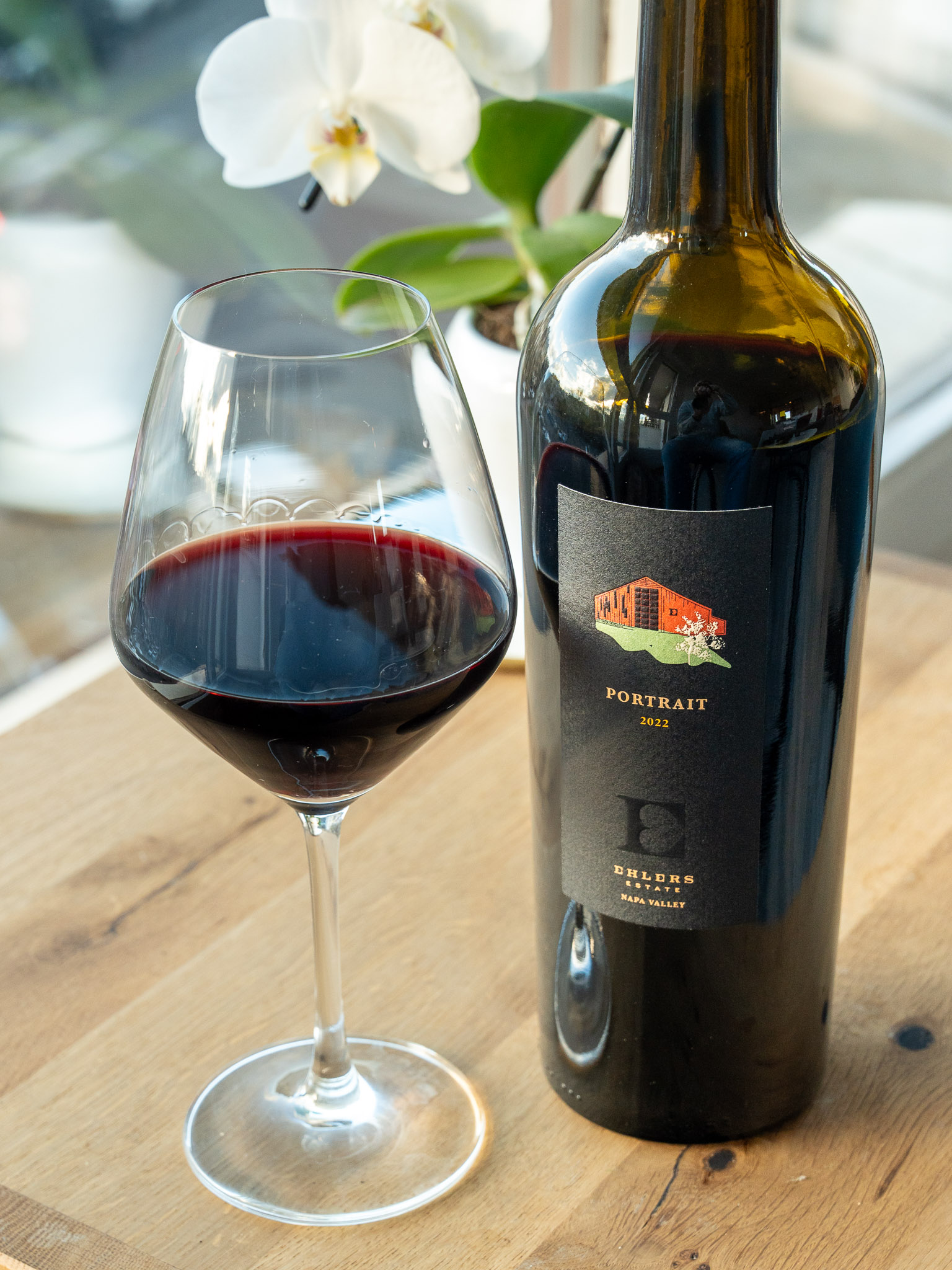
Ehlers Estate “Portrait” Red Blend, Napa Valley AMA, 2022 ($80 SRP, media sample) 14.5% abv
66% Cabernet Sauvignon, 16.4% Cabernet Franc, 16.3% Merlot, 1.3% Petite Verdot. 14 day fermentation in stainless steel followed by 21 months aging in 65% new French Oak
Eye: Medium ruby
Nose: Medium plus intensity aromas of ripe blueberries, blackberries, black plums, caramel, leather, mushrooms, a hint of green pepper. The nose shows a bit of alcohol heat, but it seems well integrated.
Mouth: Dry, medium acidity, medium plus sandy tannins, full body, high alcohol, pronounced intensity flavors, long finish. The flavors follow the nose with beautifully ripe blue/black fruit, just a touch of green pepper, earthy notes.
Observations: This is a solid Napa Valley Cabernet Sauvignon dominant blend with bold flavors and bright fruit. Firmly structured, it will only improve with additional aging. A fine choice for a fan of Napa Valley.
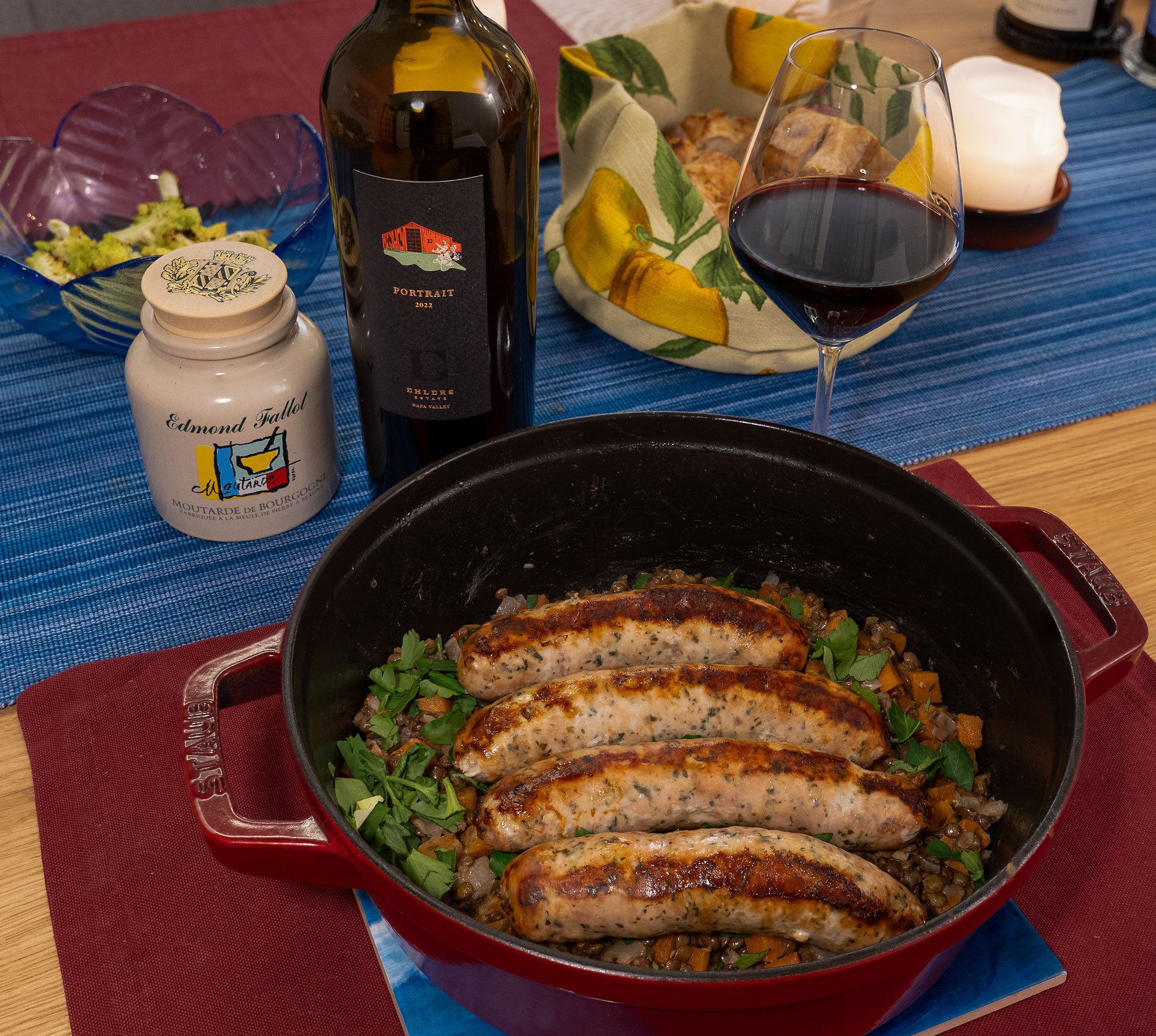
A Little Napa Valley Pairing with Cozy French Food
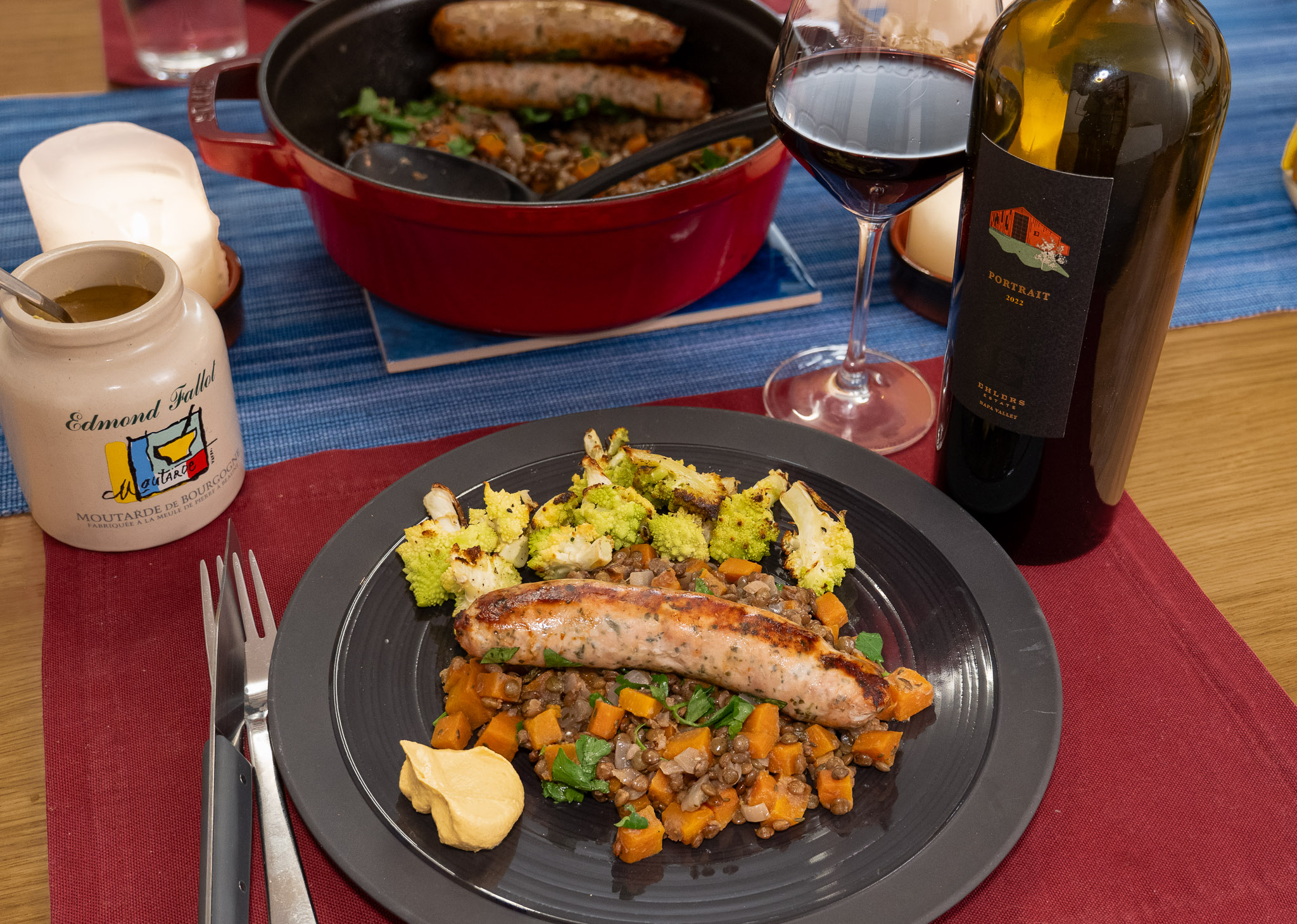
I wanted to pair our Ehlers Estate Portrait with a typical French meal, and something unlikely to be found at a table in the US. Saucisse Toulouse on a bed of green lentils and carrots fit the bill nicely. Given that we are in Dijon, of course we served mustard with the dish. While green lentils are available in the US, it’s rare to see them at the dinner table or on a restaurant menu. Not so in France! The wine paired very nicely with the dish; the fruit provided a bit of freshness while the hint of green pepper tied the wine to the savory character of the lentils and carrots.
If you’re game to give this dish a try, you can use bratwurst or other uncooked sausage, roasted about 30 minutes at 425 F on the convection setting of your oven. Cook the green lentils per the package, except using a 2:1 water to lentil ratio instead of the listed 3:1 ratio. This gives the lentils a slightly firmer texture. You can cook the carrots with the lentils, though they hold their color better if cooked separately. Finally, lentils on their own are healthy but can be a bit boring; if you add your favorite vinaigrette and think of them as a warm salad, you might decide to make them a regular at your dinner table. In warm weather, the lentils can be served cold.
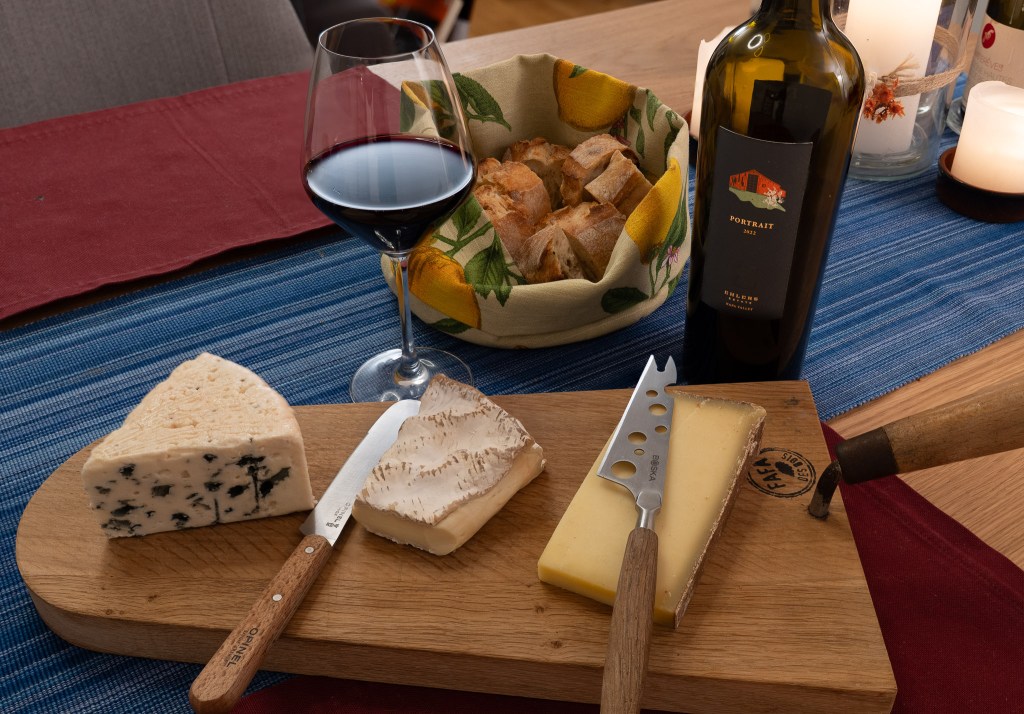
In France, cheese comes after the main dish so we had the opportunity to try the wine with Roquefort, Brie de Meaux, and Comté. As expected, the wine was delicious with the Comté, the surprise for me was how Roquefort was an outstanding flavor partner with the wine. Something about the fruit character in the wine just clicked with the creamy strong blue flavor of the cheese.
My thanks to Ehlers Estate for providing the bottle of wine and to Adam Casto for sharing his views as winegrower!






 foodwineclick
I am a fan of Ehler’s Estate and really enjoyed this article Jeff!