my dinner with Giovanni Gaja
Surprise Dinner with Giovanni Gaja
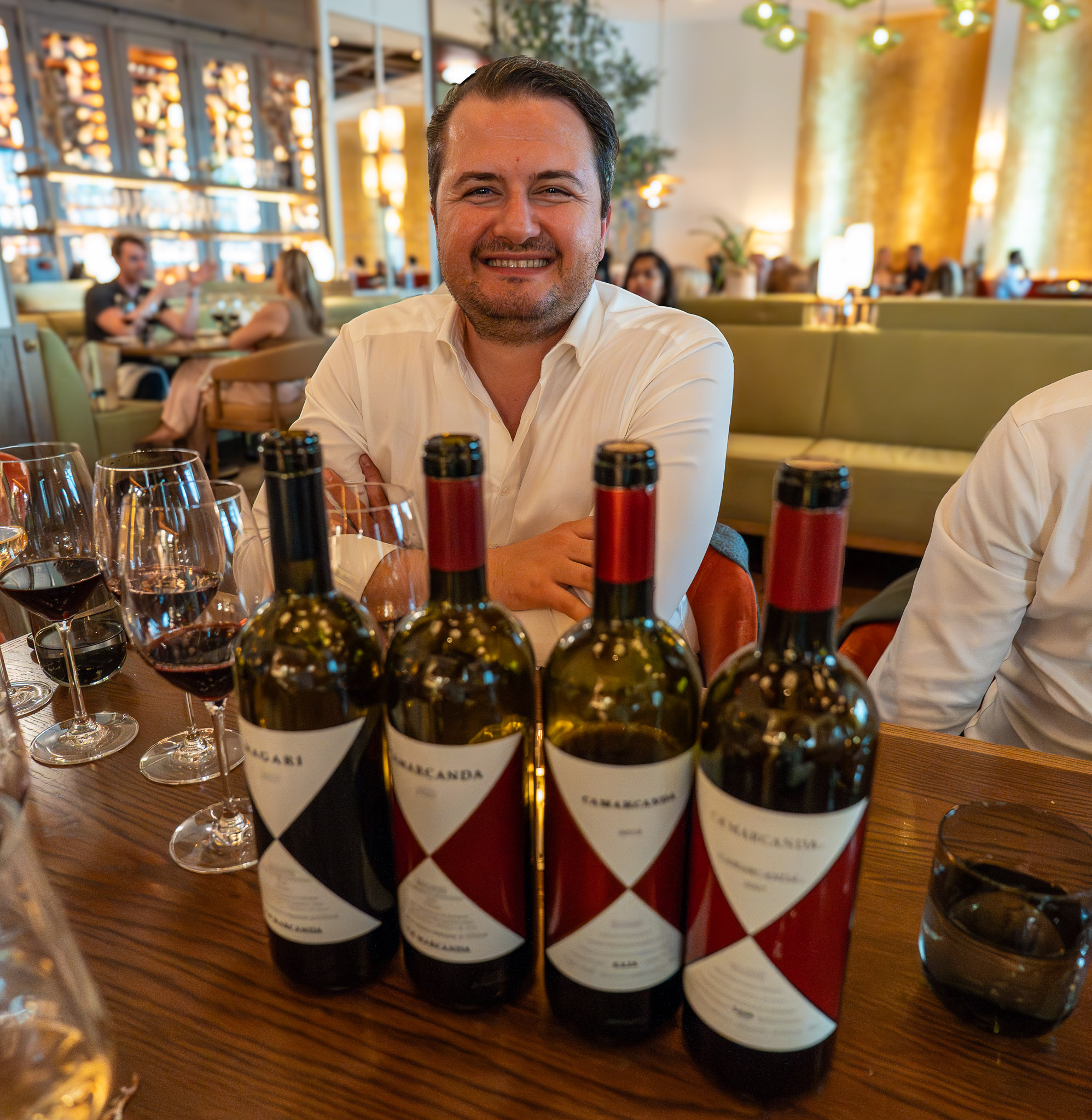
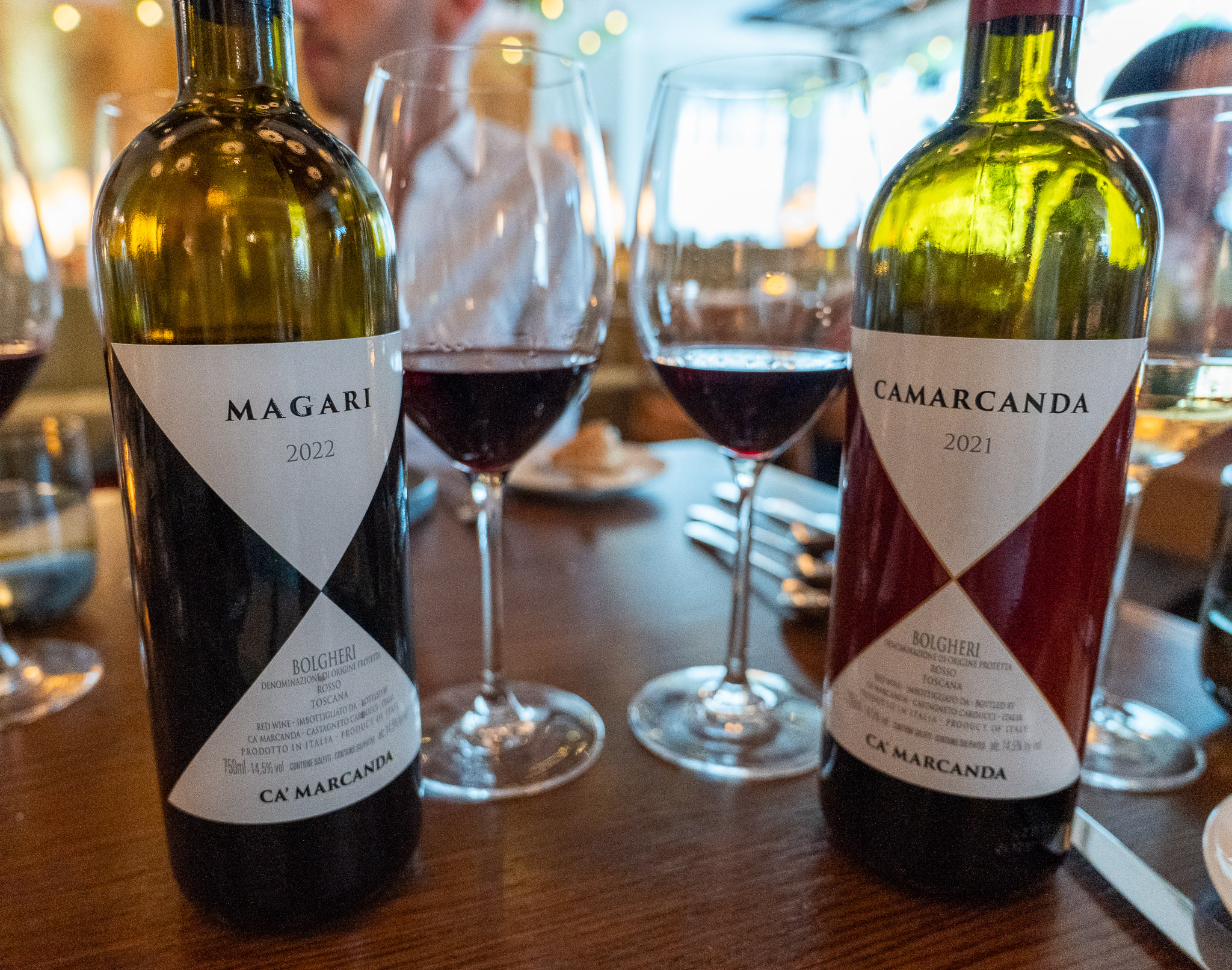
Early this summer, I received a short-notice invitation to a dinner with Giovanni Gaja at Mara restaurant in downtown Minneapolis. Usually these events have a dozen or so journalists, sommeliers, and buyers. A short-notice invitation is likely because someone dropped out. No matter, if the event is interesting and I’m available, I’m happy to accept. When I arrived at the restaurant, I was surprised to find only one other local journalist. Instead of a presentation, we enjoyed conversation with Giovanni over dinner, learning about the Ca’ Marcanda story.
(note: click on any photo for a full size slide show)
What’s a Supertuscan?
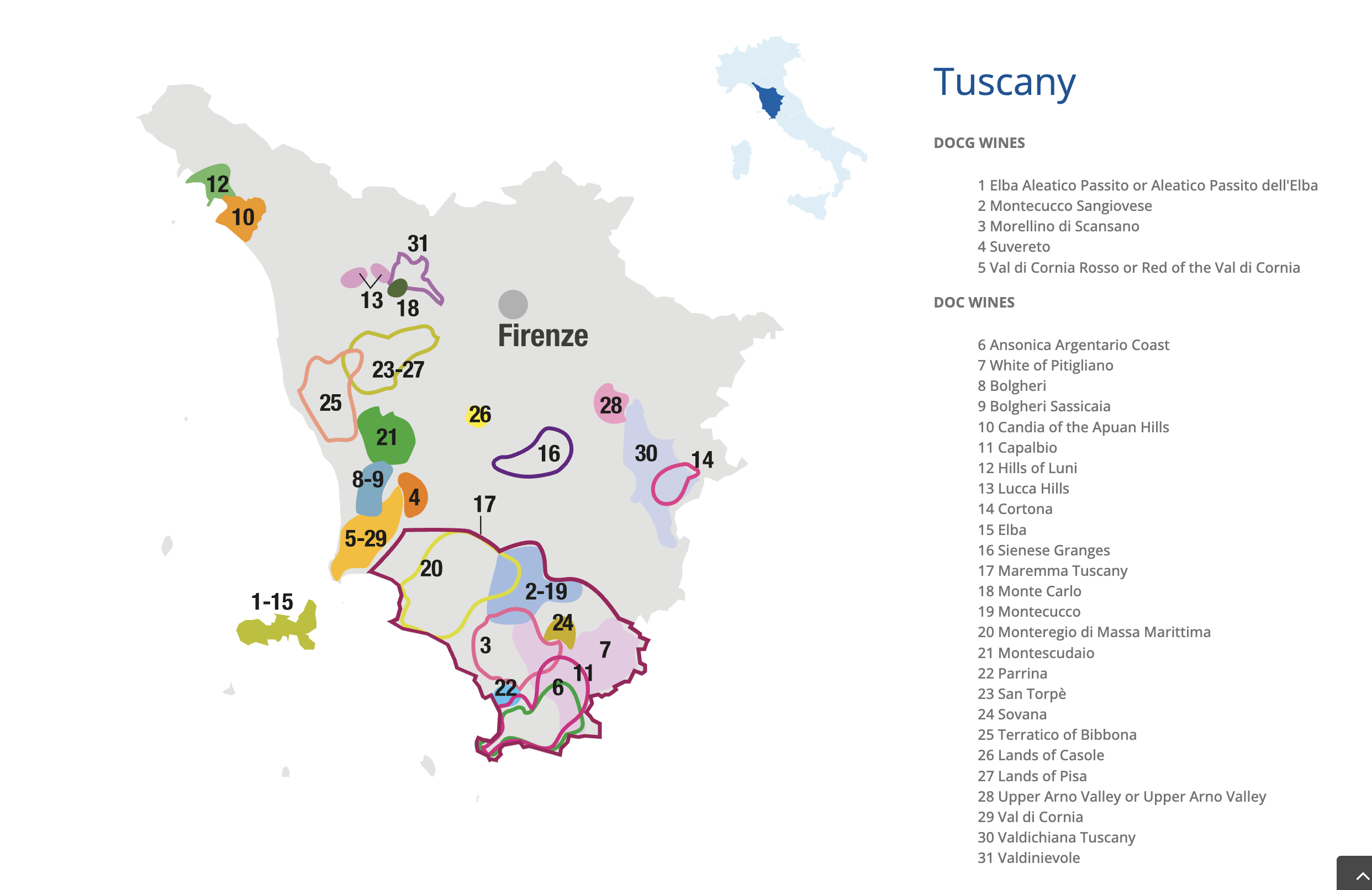
Supertuscan wines come from the Bolgheri region in Italy, a low lying area close to the Ligurian Sea (part of the Mediterranean). Historically, the region was not known for wine, certainly not red wine. The area is not hot enough to fully ripen Sangiovese, the main red grape of Tuscany. In the 1940’s, the owner of Tenuta san Guido noticed the similarity between Bolgheri and the Graves area of Bordeaux. The gravelly soils and maritime climate suggested that Cabernet Sauvignon and Cabernet Franc could flourish and make superb wine in Bolgheri. This was a private quest until the 1968 vintage with the 1st commercial release of his Sassacaia wine and subsequent 1st place at a Decanter blind tasting of Bordeaux style wines from around the world in 1978. At the beginning, the Supertuscans could only be labeled as table wine but eventually gained DOC status in 1983.
Gaja Ca’ Marcanda and Changing My Mind Around Supertuscans
In the past, my personal view on Supertuscans was the question: “does the world really need another Bordeaux blend wine region? And can’t they grow Italian grapes there?” As I learned more about climate, soil and nearby bodies of water, I came to understand the logic of Bolgheri as a place for Bordeaux varieties. I can also see the attraction – great winemakers love a challenge!
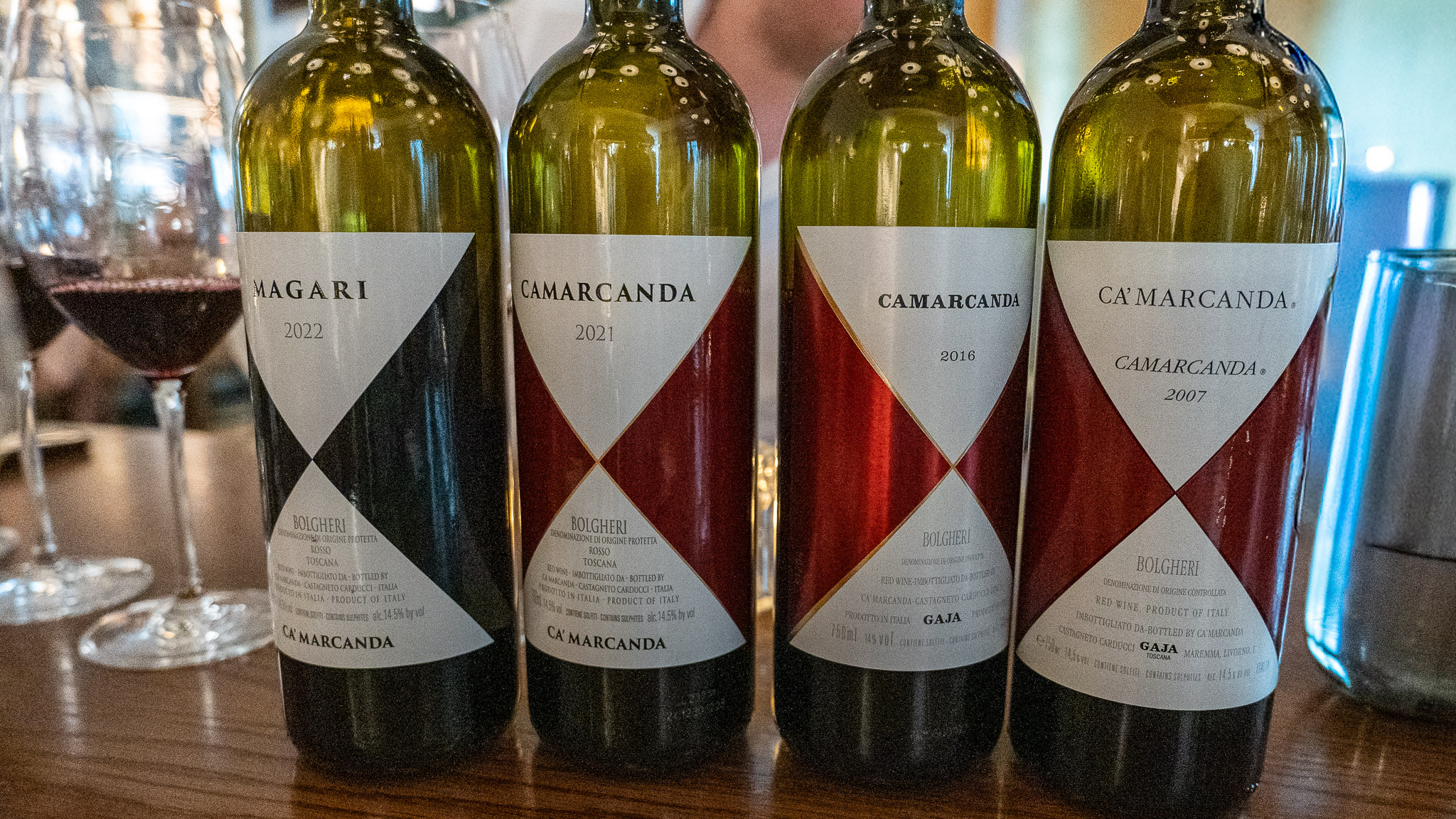
At our dinner, Giovanni told us his story about Ca’ Marcanda. After long negotiations, Angelo Gaja purchased the virgin land for his operation in 1996. In fact, the name Ca’ Marcanda is translated as “The House of Endless Negotiations”. Giovanni was 3 years old at the time of purchase, and he remembers driving from Barbaresco to Ca’ Marcanda every Friday with his family to work on the new estate. Vineyards were planted in 1997. From the beginning, respect for the environment was a key consideration. The winery was built for gravity operations with 2/3 underground. While they are not certified in any particular sustainable initiative, Giovanni explained that life and health of the soil, the vineyards and the surrounding property are key goals. They release natural predator insects, employ techniques which create sexual confusion to threat insects. They constantly explore and adapt their approach to current best practices in vineyard health.
Disclosure: I was invited to attend a dinner with Giovanni Gaja in Minneapolis. After the dinner, I purchased the bottle of wine featured here at a local wine shop.
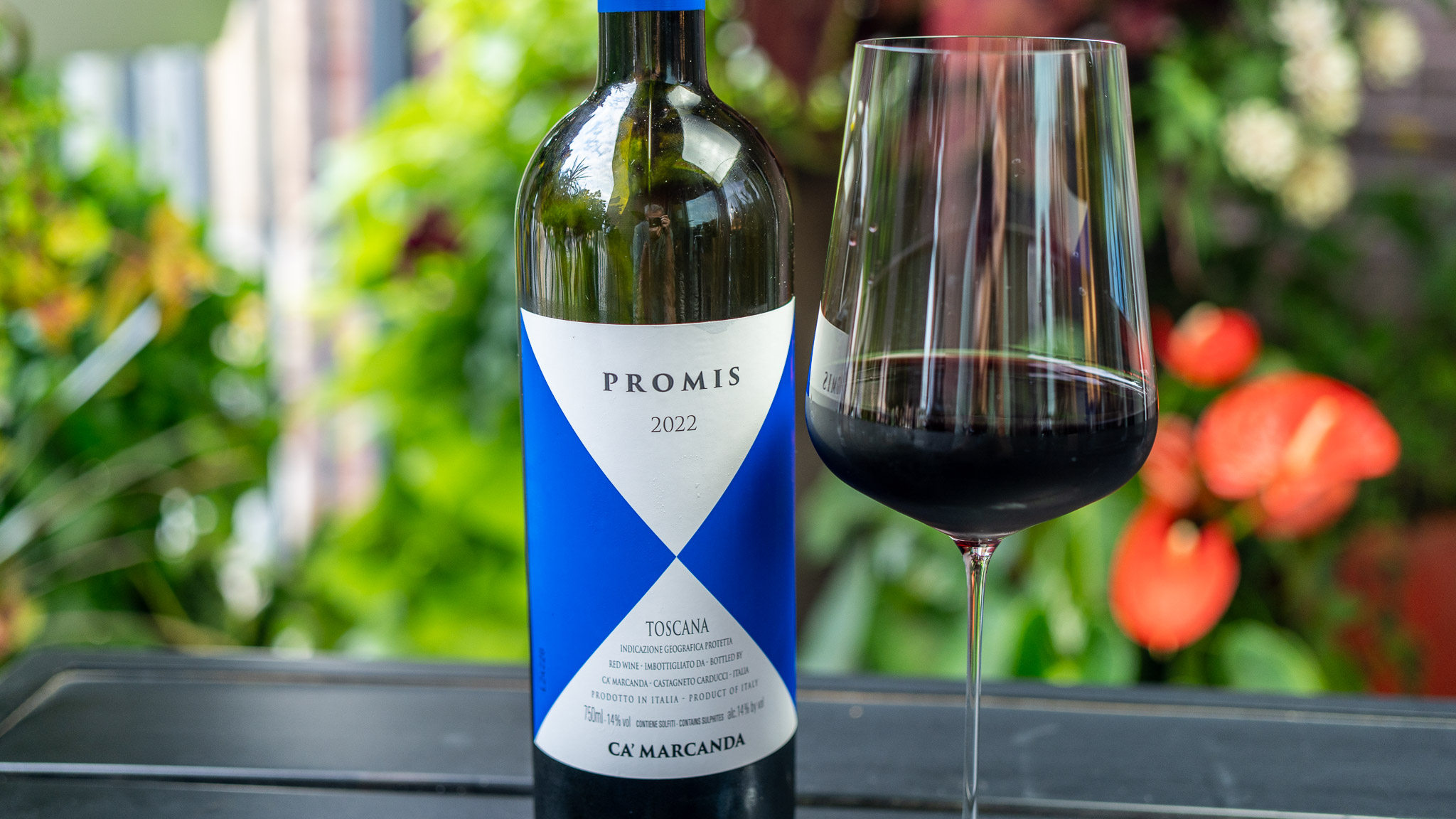
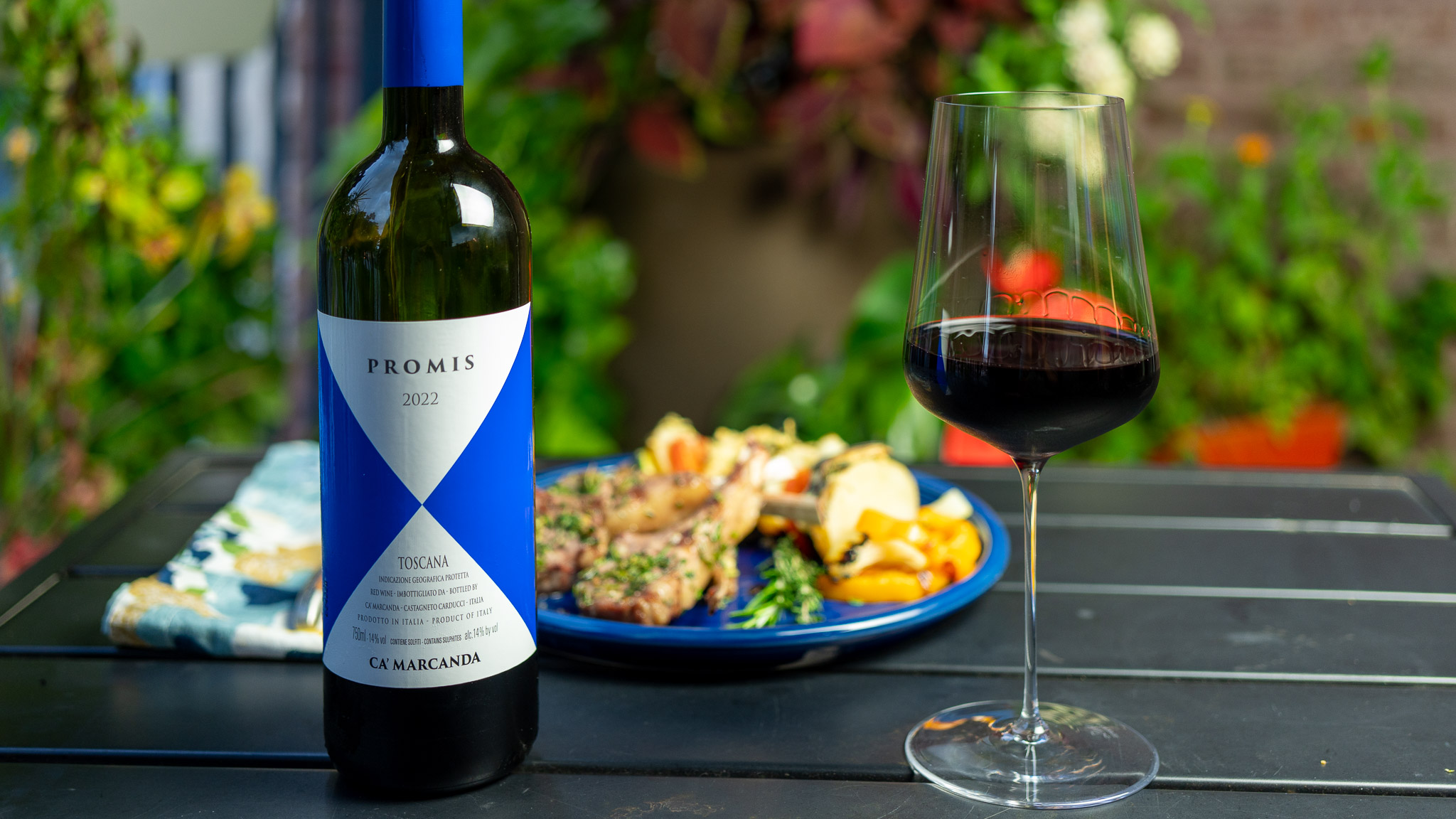
Ca’ Marcanda Promis 2022 Toscana IGP ($55 purchased locally) 14% abv
Grapes: Merlot, Syrah, Sangiovese blended after vinification, followed by 12 months oak aging.
Eye: Medium ruby
Nose: Medium plus aromas of fresh, ripe blackcurrent, blackberry, blueberry, vanilla, cedar, hints of eucalyptus and scrub brush.
Mouth: Dry, medium plus acidity, medium sandy fine-grained tannins, medium plus body, high alcohol, medium plus flavor intensity, medium plus finish. Flavors follow the aromas with a bit more presence of eucalyptus and cedar.
Observations: A youthful, generous, sophisticated red wine with refined but present tannins. A very nice wine, sure to be enjoyed by any fan of Merlot based blends from around the world.
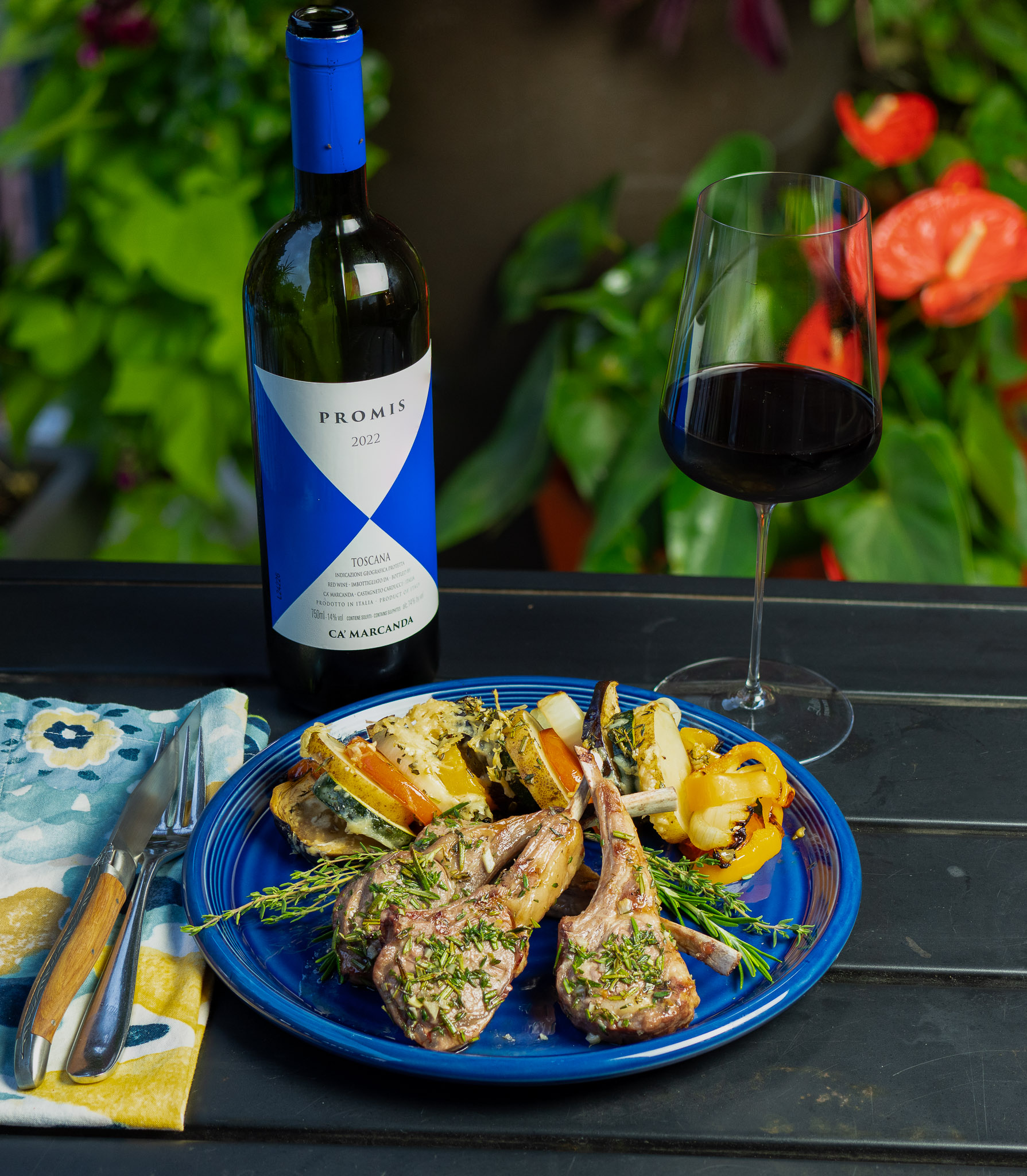
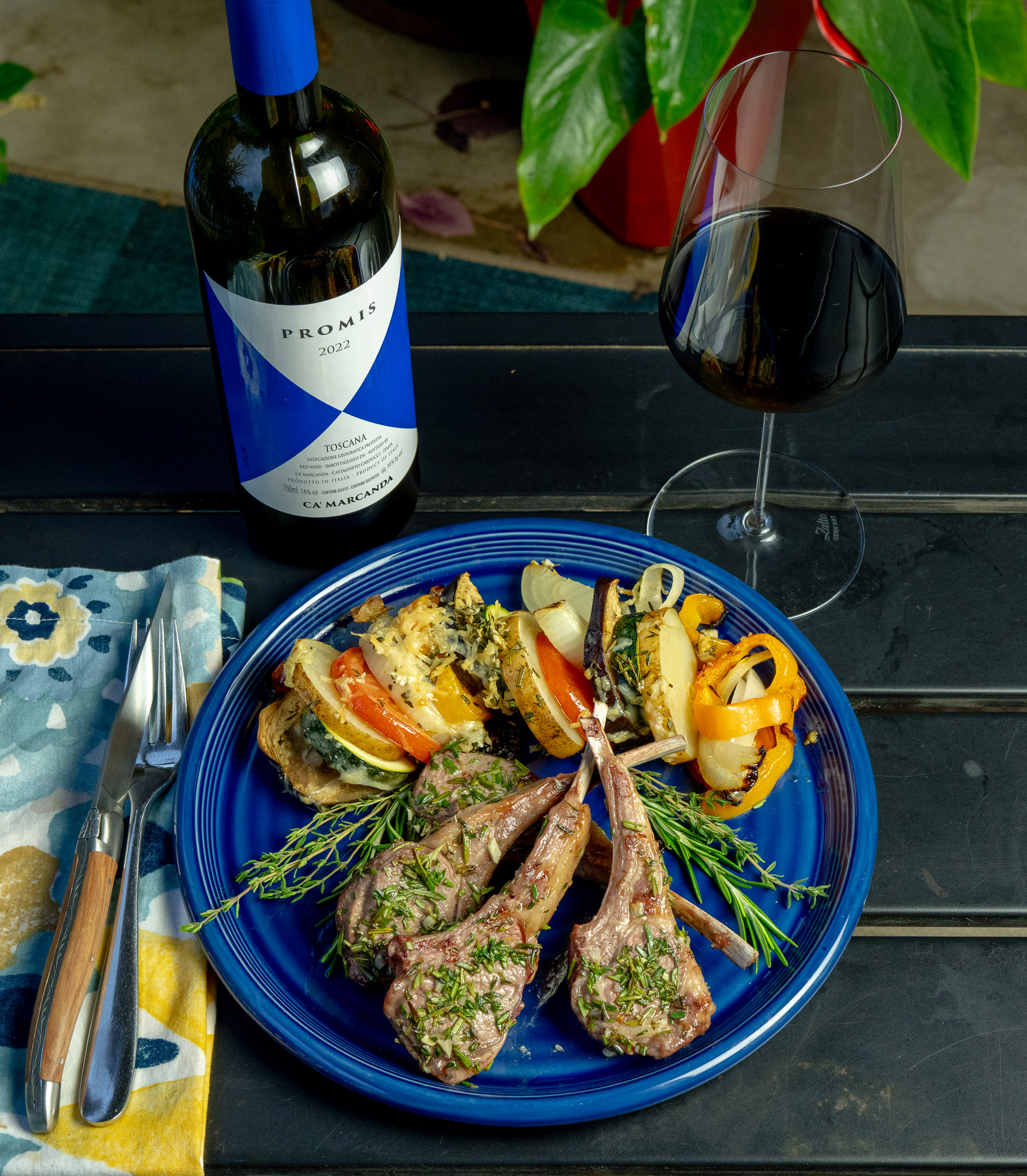
Dinner at Home with Ca’ Marcanda Promis
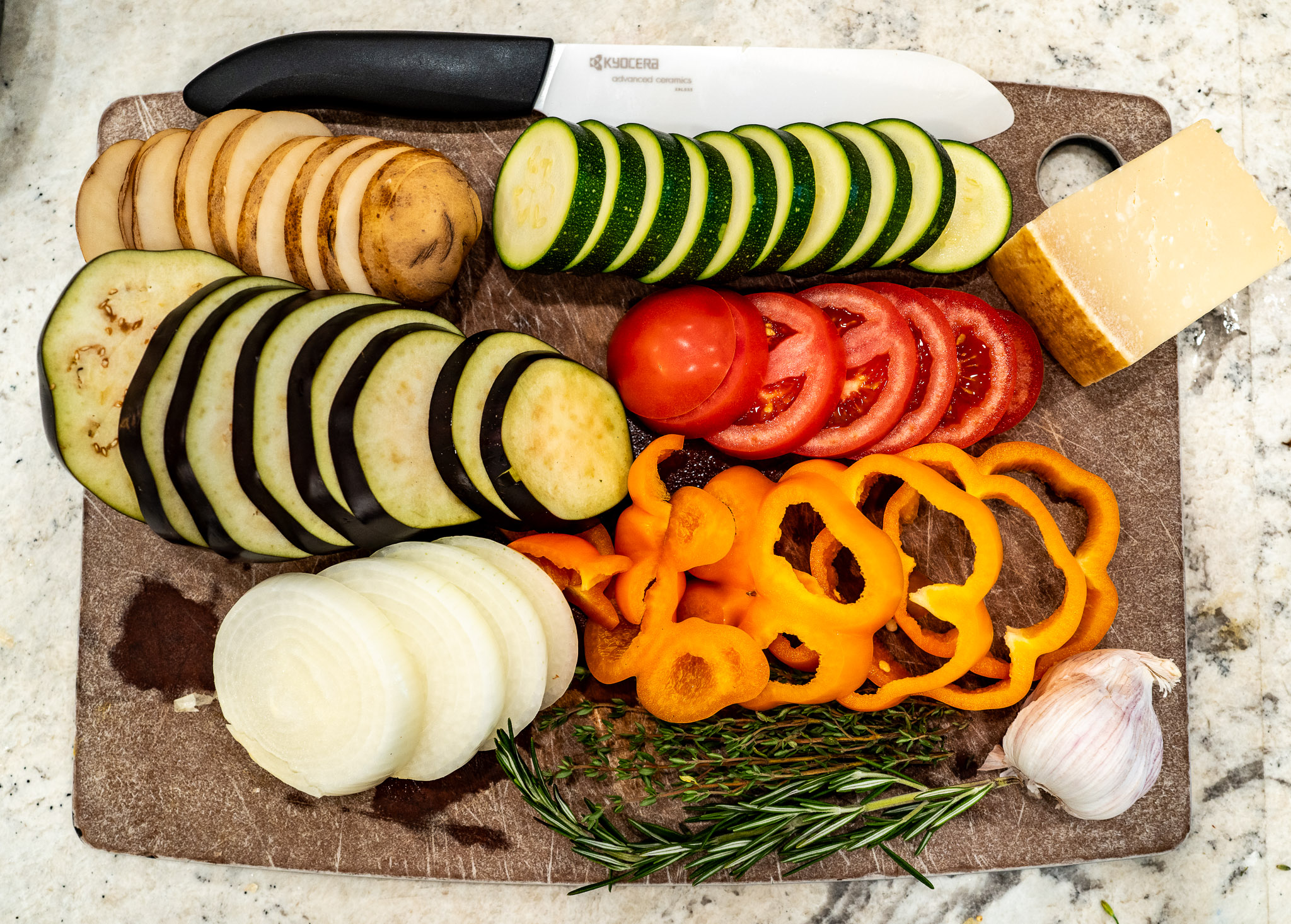
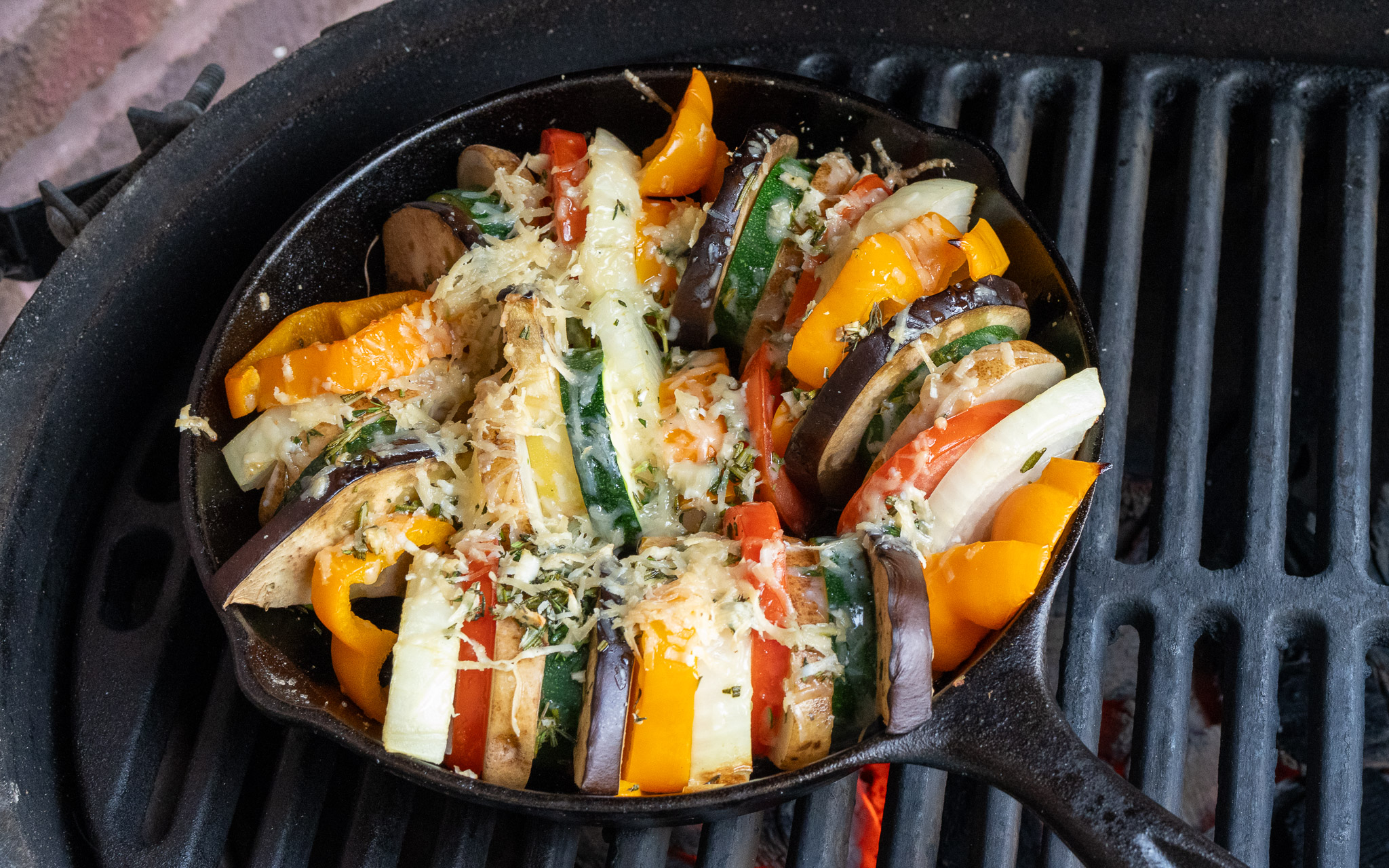
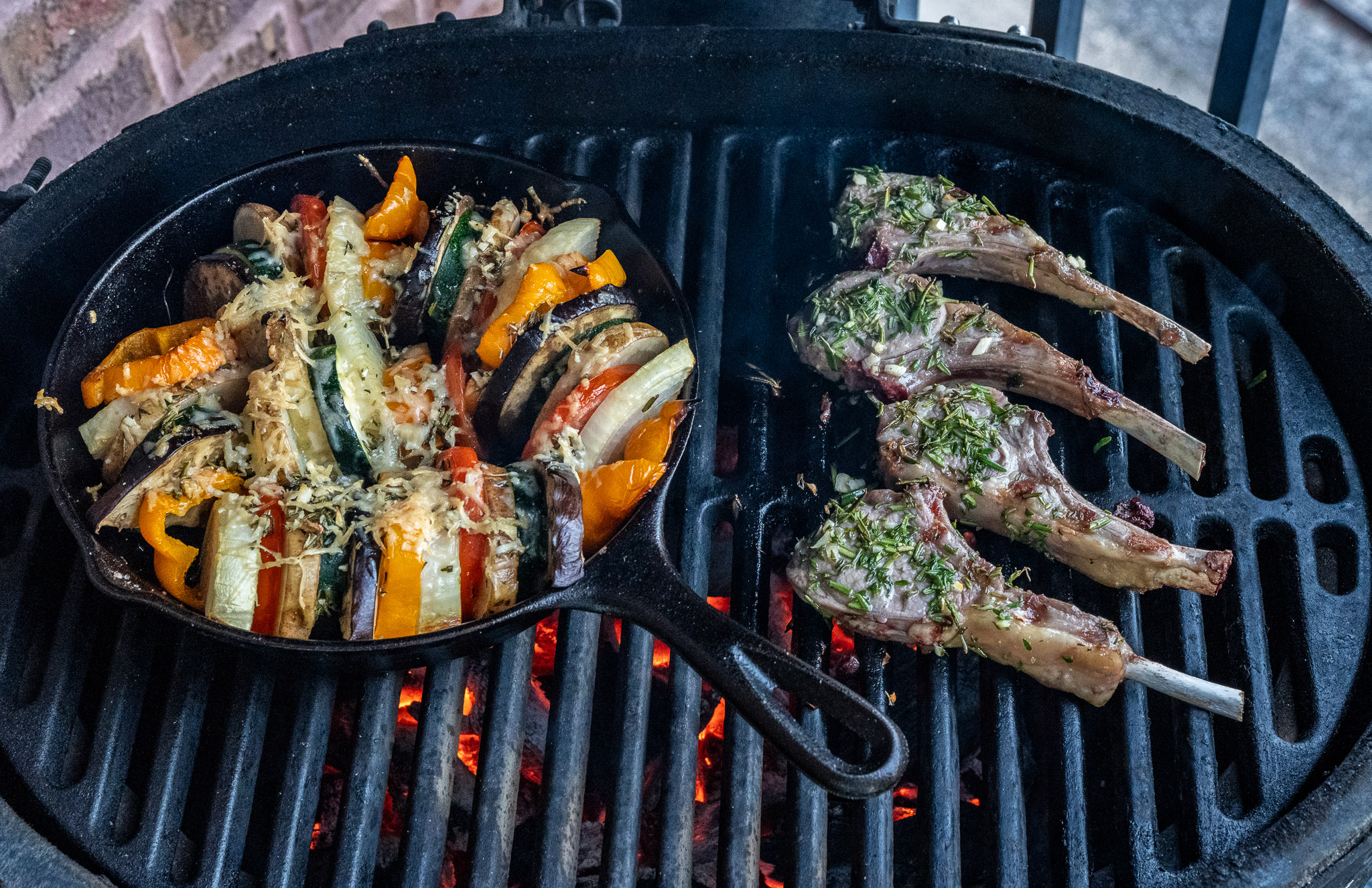
Summer lingered into fall in Minneapolis this year. We enjoyed one of our last dinners out on the balcony with simply grilled lamb chops, a veggie tian, and Ca’ Marcanda Promis. If you’re not familiar with a vegetable tian, here’s a good recipe to start you on your way. You can combine any number of seasonal vegetables with olive oil, herbs and I like to finish with a bit of cheese.







 foodwineclick
Lucky you, Jeff. I rate these three amongst my favourite wines. Been buying and drinking them for a long time.Regards, Maarten